Burundi 2025 10,000 Franc P.60 CFU
A large format 10,000 Franc banknote.
In February 2025, the Banque de la République du Burundi (BRB) will issue a new 10,000 franc banknote to mark the 50th anniversary of the Convention on International Trade in Endangered Species of Wild Fauna and Flora (CITES), also known as the Washington Convention on International Trade in Endangered Species of Wild Fauna and Flora. CITES is a multilateral treaty that protects endangered plants and animals from the threats of international trade. CITES came into force on July 1, 1975 and is one of the largest and oldest agreements on the protection and sustainable use of plants and animals in existence.
The large-format banknote measures 400 x 288 mm, surpassing the size of the Malaysian 600 ringgit note issued in 2018, which measures 370 x 220 mm.
Only 1,000 banknotes will be issued.
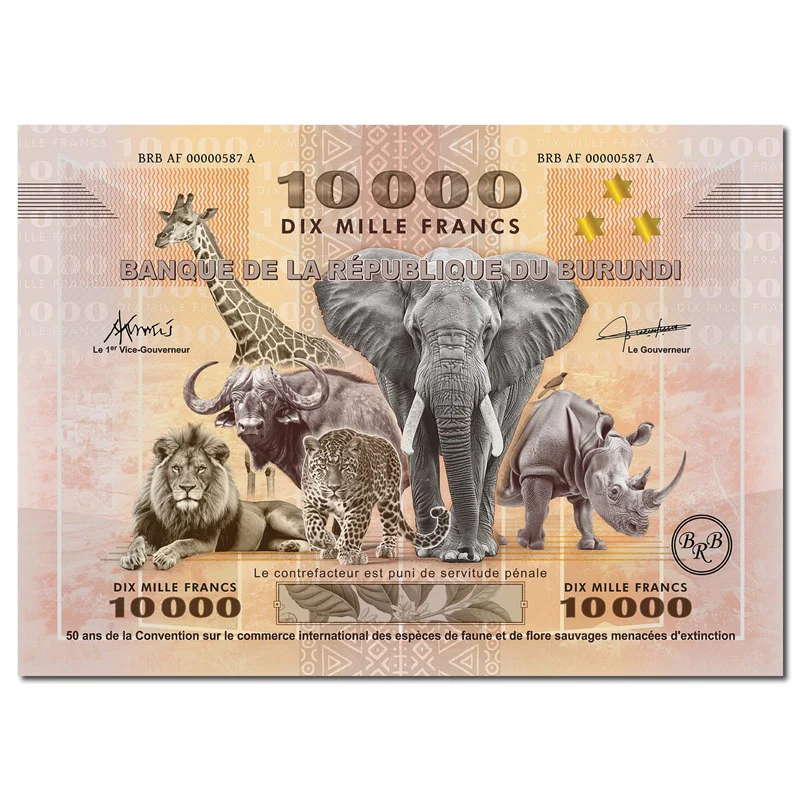
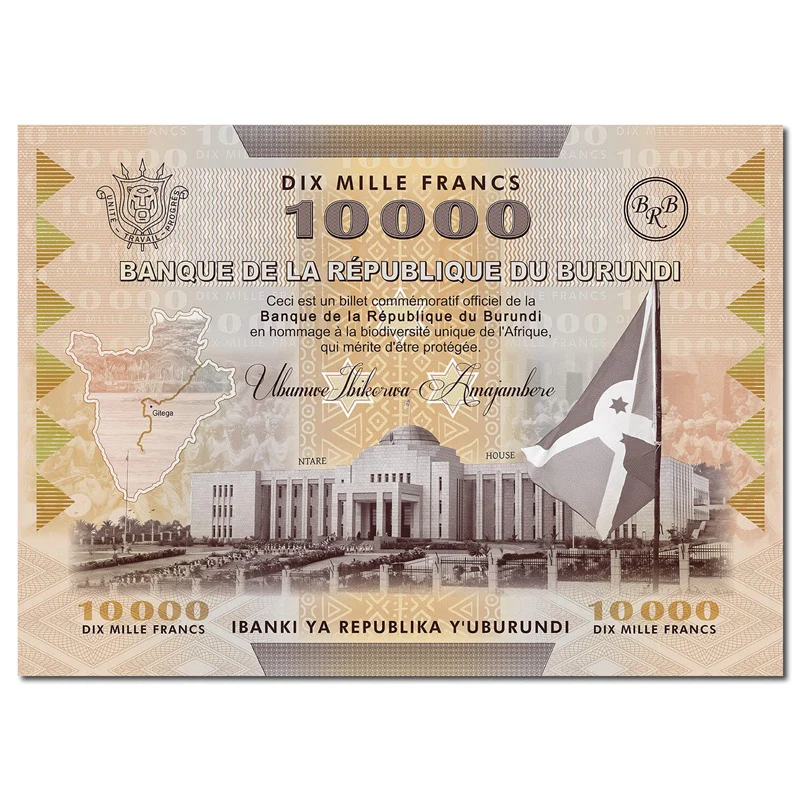
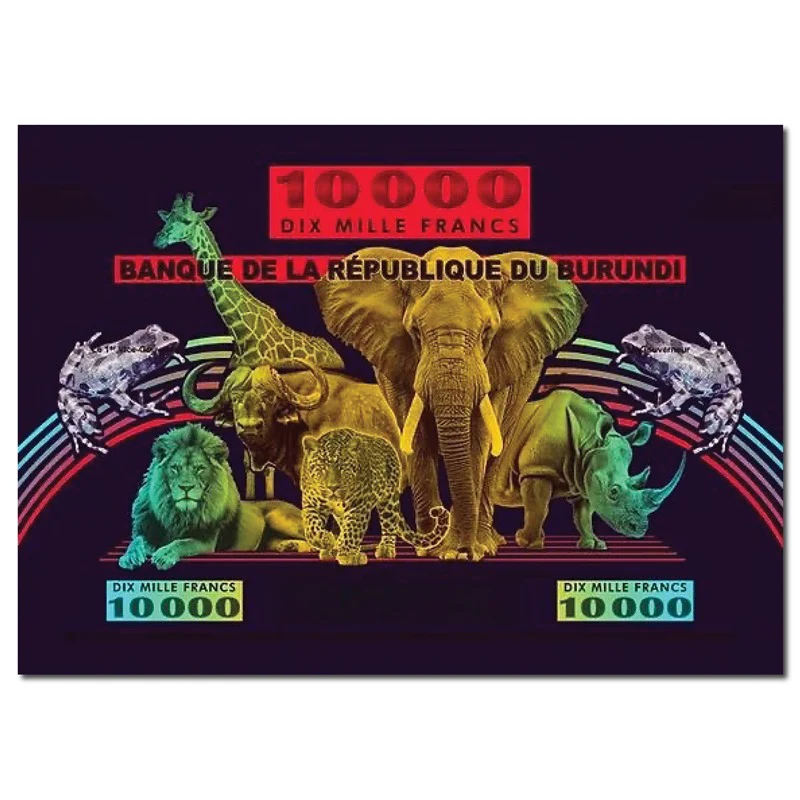
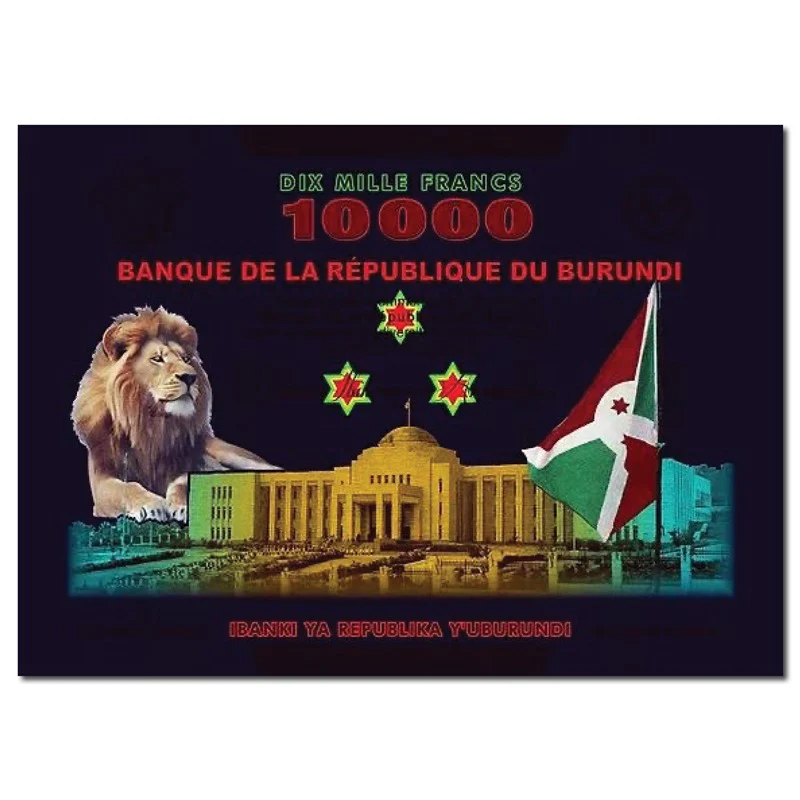
The design of the banknote highlights both international conservation and the country of Burundi. In keeping with the banknote's unusual format, the main motif on the front is dedicated to African megafauna. It features a lion, a giraffe, a Cape buffalo, an African leopard, an African elephant and a black rhinoceros with an oxpecker perched on top. The animals depicted include not only the world's largest land mammals, but also some species protected by CITES. The reverse is dedicated to Burundi and shows the presidential palace in Bujumbura, the national flag, the national coat of arms, a map of the country with the source of the Nile, as well as dancers and drummers.
The banknote was manufactured according to the latest standards and is equipped with the latest security features, such as holographic foil, gold leaf, haptic elements, micro lines and an innovative UV design. It is made of high-quality cotton banknote paper with a watermark in the shape of a globe and two security threads. The two transparent security threads embedded during the manufacturing process have three UV colors with a rainbow effect (red, yellow and blue) and guilloche micro lines. The security paper was printed using a complex process consisting of different steps: offset, gravure and digital printing. Thanks to the gravure printing, the animals on the front of the banknote can be felt as raised motifs.
The three stars of the national flag are shown as golden holograms on the front (top right) and change color when the banknote is tilted. The twelve triangles, depicted in a line pattern on the left and right sides of the back, have been coated with gold.
Many additional motifs on both sides of the banknote become visible under UV light.
The front, for example, features the Burundi long-fingered frog. This rare species, which only occurs in the western part of the East African Rift, was thought to be extinct since its discovery in 1949. More recent sightings were reported in 2011. The frog owes its name to the unusually long third finger of the male animals.
The back of the banknote shows a lion, the national animal of Burundi, and the national flag in its original colors when viewed under UV light.
This commemorative banknote is a non-circulating banknote, but is still legal tender.
- Issued by Banque de la République du Burundi
- February 2025
- 50th Anniversary of Convention on International Trade in Endangered Species of Wild Fauna and Flora - CITES (1975-2025)
- 10,000 Franc
- P.60
- Measures 400 x 288 mm
- Crisp Flat Uncirculated (CFU)
Product Information
Product Information
Shipping & Returns
Shipping & Returns
Description
A large format 10,000 Franc banknote.
In February 2025, the Banque de la République du Burundi (BRB) will issue a new 10,000 franc banknote to mark the 50th anniversary of the Convention on International Trade in Endangered Species of Wild Fauna and Flora (CITES), also known as the Washington Convention on International Trade in Endangered Species of Wild Fauna and Flora. CITES is a multilateral treaty that protects endangered plants and animals from the threats of international trade. CITES came into force on July 1, 1975 and is one of the largest and oldest agreements on the protection and sustainable use of plants and animals in existence.
The large-format banknote measures 400 x 288 mm, surpassing the size of the Malaysian 600 ringgit note issued in 2018, which measures 370 x 220 mm.
Only 1,000 banknotes will be issued.
The design of the banknote highlights both international conservation and the country of Burundi. In keeping with the banknote's unusual format, the main motif on the front is dedicated to African megafauna. It features a lion, a giraffe, a Cape buffalo, an African leopard, an African elephant and a black rhinoceros with an oxpecker perched on top. The animals depicted include not only the world's largest land mammals, but also some species protected by CITES. The reverse is dedicated to Burundi and shows the presidential palace in Bujumbura, the national flag, the national coat of arms, a map of the country with the source of the Nile, as well as dancers and drummers.
The banknote was manufactured according to the latest standards and is equipped with the latest security features, such as holographic foil, gold leaf, haptic elements, micro lines and an innovative UV design. It is made of high-quality cotton banknote paper with a watermark in the shape of a globe and two security threads. The two transparent security threads embedded during the manufacturing process have three UV colors with a rainbow effect (red, yellow and blue) and guilloche micro lines. The security paper was printed using a complex process consisting of different steps: offset, gravure and digital printing. Thanks to the gravure printing, the animals on the front of the banknote can be felt as raised motifs.
The three stars of the national flag are shown as golden holograms on the front (top right) and change color when the banknote is tilted. The twelve triangles, depicted in a line pattern on the left and right sides of the back, have been coated with gold.
Many additional motifs on both sides of the banknote become visible under UV light.
The front, for example, features the Burundi long-fingered frog. This rare species, which only occurs in the western part of the East African Rift, was thought to be extinct since its discovery in 1949. More recent sightings were reported in 2011. The frog owes its name to the unusually long third finger of the male animals.
The back of the banknote shows a lion, the national animal of Burundi, and the national flag in its original colors when viewed under UV light.
This commemorative banknote is a non-circulating banknote, but is still legal tender.
- Issued by Banque de la République du Burundi
- February 2025
- 50th Anniversary of Convention on International Trade in Endangered Species of Wild Fauna and Flora - CITES (1975-2025)
- 10,000 Franc
- P.60
- Measures 400 x 288 mm
- Crisp Flat Uncirculated (CFU)